
Thermal imaging has become a useful tool for birding, especially when birds are difficult to spot in low light or dense vegetation. However, even with a 384 × 288 thermal sensor, a small bird may appear as a blurry heat signature with limited visible detail.
In forests, reed beds, and grassy environments, background heat signatures and image noise can make potential targets harder to distinguish. Sensor resolution is only one part of the equation. Image processing also plays an important role in how clearly thermal details are presented.
This is where the Nocpix Nature Reality+ (R+) Super-Resolution Algorithm comes in. Designed to enhance thermal image presentation, R+ helps make potential bird targets easier to observe and interpret on Rovex's large display.
Beyond Pixels: What Is R+ Super-Resolution?
The “R+” in Reality+ reflects Nocpix Nature's approach to enhancing the thermal observation experience through advanced image processing.
Super-resolution refers to techniques that aim to produce a higher-detail image representation from a lower-resolution source. Rather than simply enlarging an image, these techniques process image information to improve the appearance of edges, structures, and fine details.
On Rovex, the R+ Super-Resolution Algorithm is designed to enhance the presentation of thermal images, helping users distinguish potential heat sources from visually complex backgrounds.
For birders, this matters because a thermal image is not just about detecting a warm object. It is also about interpreting the shape and position of a potential target within its surroundings.

How R+ Super-Resolution Enhances Image Quality on Rovex
Rovex uses R+ Super-Resolution to enhance thermal image presentation during observation. Its benefits can be understood through three key aspects.
1. Enhanced Edge Definition
When a bird appears as a small heat signature, its outline may be difficult to distinguish from nearby branches, leaves, reeds, or grass.
R+ image processing helps enhance the definition of thermal features, making potential targets easier to distinguish within the scene. This can support the initial search process by helping users interpret the shape and boundaries of a heat signature.
2. Noise Reduction for a Cleaner Image
Thermal images can contain visual noise that makes subtle details harder to interpret. Complex backgrounds and changing environmental conditions can add to the challenge of identifying potential targets.
R+ is designed to improve image clarity through image processing that helps reduce distracting noise. A cleaner-looking image can make it easier for users to focus on relevant thermal features while scanning the environment.
3. Enhanced Visual Detail on a Large Display
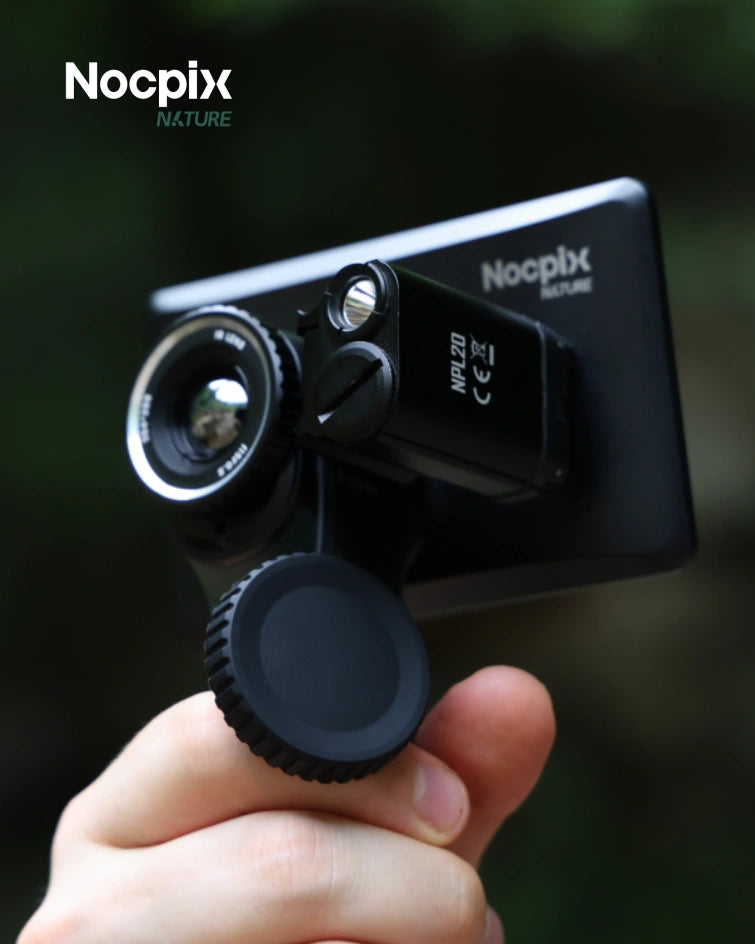
Rovex features a 384 × 288 thermal sensor and a 5-inch display. R+ Super-Resolution enhances the visual presentation of the thermal image, helping users observe potential target shapes and structures more clearly.
The larger screen also provides a more spacious viewing experience when scanning the scene or sharing an observation with others nearby.
It is important to distinguish enhanced visual detail from native sensor resolution: image processing can improve how details are presented, but it does not change the sensor's underlying resolution or guarantee that every small or distant bird will be identifiable.

Designed for Different Birding Environments
Birding conditions vary considerably, from woodland and reed beds to open fields and wetlands. Different environments can present different backgrounds and thermal contrasts, making adaptable image settings useful during observation.
Rovex offers multiple image modes for different outdoor environments, including a dedicated Birding Mode. This mode is designed to support bird searching by adjusting image presentation for the task.
When scanning against backgrounds such as the sky, water, or open terrain, image contrast and background appearance can affect how easily a potential target stands out. Suitable image settings can help users interpret the thermal scene and identify areas that may deserve a closer look.
For beginners, clearer image presentation can make thermal scenes easier to interpret as they learn to distinguish potential targets from background features. More experienced birders can also benefit from a viewing setup that supports efficient scanning before closer inspection.
Thermal imaging remains a search aid rather than a guarantee of species identification. Users should combine thermal observations with visible features, behavior, habitat, and other available cues when identifying a bird.
[Image: Rovex in a birding environment]
R+ Super-Resolution: Making Thermal Images Easier to Interpret
R+ Super-Resolution is an important part of the Rovex thermal observation experience. By enhancing the presentation of image details and helping reduce distracting visual noise, it is designed to make thermal scenes easier to interpret during bird searches.
Combined with Rovex's 384 × 288 thermal sensor, 5-inch display, and dedicated Birding Mode, R+ supports a practical observation workflow: scan the environment, locate a potential heat signature, and examine it more closely.
For birders exploring dense vegetation, woodland edges, or other challenging environments, the goal is not simply to make a thermal image look sharper. It is to make the information on the screen easier to understand, helping users decide where to look next.
Delen: